Types of Irrigation Systems
There are two main types of irrigation systems: low flow and high flow. Both can be utilized in one garden if needed. Low flow systems refer to micro spray, drip emitters, or drip lines. High flow systems are fixed spray, rotor, impact, bubbler, and soaker hose. Drip irrigation is preferable for most parts of the garden except lawns. Where appropriate, sprinklers can be used for lawns or low-growing groundcovers. Keep in mind, the irrigation system must be designed to prevent runoff, low head drainage, overspray, or other similar conditions where irrigation flows onto non-targeted areas, such as adjacent property, non-irrigated areas, hardscapes, roadways, or structures.
Drip Systems
Low flow irrigation (also known as micro irrigation) refers to emitters, drip lines, micro sprays, and mini rotors.
- Drip irrigation systems (also known as micro, low-flow, low-volume, and trickle) use drip emitters, inline emitters, miniature sprayers, and micro-sprays.
- Micro spray and mini rotors clog easily, and need frequent maintenance. Observe monthly, and make any necessary repairs or replacements to emitters.
- Drip lines are recommended for continuously rooting ground covers such as Roman chamomile (see Plants on Main Menu).
- Drip lines are flexible tubing with emitters (tiny water-flow regulators in each hole in the line) evenly spaced along the tubing. Drip lines are also called inline drip or subsurface drip. Some drip lines may be placed on top of the ground with an emitter(s) at each plant, and covered by a few inches of mulch. A subsurface drip line (underground) can be used to irrigate ground covers. Installation can occur before (in ground) or after (above ground) for groundcovers.
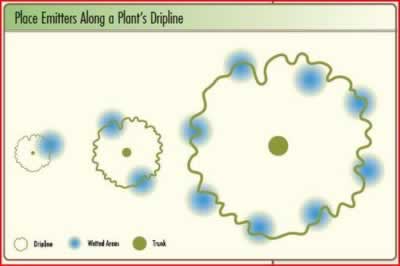
- For individual emitter layouts, water is delivered just where plants need it. This can reduce the area for, and number of, weeds in the garden.
- Water is applied very slowly in gallons per hour (gph).
- Inline drip must obviously operate at a reduced pressure in order to deliver only a small amount of water at a specified rate; thus requires a pressure reducer and filters.
- Drip systems can be connected to a hose end and manually operated, or permanently connected to your main water source and operated by an automatic controller.
- Plan enough capacity (emitters) to deliver the needed amount of water as your landscape matures. Use the product’s emitter selection chart to determine the flow rate and number of emitters per plant.
- For areas with long runs of tubing and changes in grade, pressure compensating emitters should be used.
Areas of concern when using drip:
- Polyethylene ("poly") tubing on the surface in areas of heavy foot traffic or children's play areas can easily be broken, disconnected, vandalized, or present a tripping hazard.
- Dogs, raccoons, gophers, and other animals may chew tubing and emitters.
- If a pre-packaged drip kit is used, be sure the components are of high quality and right for the job. Keep the manufactures contact information so replacement parts can be located.
- Drip irrigation needs to be regularly maintained.
Overhead Sprinklers
Matched-precipitation sprinkler heads guarantee that a half-circle head will deliver just as much water per square foot as a full-circle head spraying the same distance. Matched precipitation simply means all heads deliver a uniform amount of water across each square foot of an irrigated area. Every blade of grass gets no more and no less than the next. Ask for assistance from a knowledgeable salesperson.
- Sprinklers and other emission devices must have matched precipitation rates.
- Head-to-head coverage is recommended; however, sprinkler spacing must be designed to achieve the highest possible distribution uniformity using the manufacturer’s recommendations.
- Specific sprinklers (gear driven rotors) and sprinkler nozzles (stream rotors, like the Hunter MP Rotator) reduce the amount of water delivered and allow the soil to absorb the water.
- Narrow or irregularly shaped areas, including turf, that are adjacent to non-permeable surfaces and are less than eight feet in width in any direction, should be irrigated with subsurface irrigation or low-volume irrigation systems. Overhead sprinklers can cause substantial water waste and are inappropriate in these situations.
- To prevent overspray and runoff, overhead irrigation is not appropriate within 24 inches (two feet) of any non-permeable surface.
- Turf might not be a wise or appropriate plant selection on slopes, particularly where the toe of the slope is adjacent to an impermeable hardscape and overhead sprinklers are used.
- Fixed spray heads and rotors apply water in gallons per minute (gpm).
- Sprinkler heads with check valves or anti-drain valves are highly recommended to avoid water waste.
You can easily convert your overhead sprinklers to drip irrigation.
There are generally two ways to convert a high-pressure, high-flow spray system to a low-pressure, low-flow drip system:
- Installation of a master filtration and master pressure reduction just before or just after the drip irrigation valves, using standard drip irrigation equipment; or
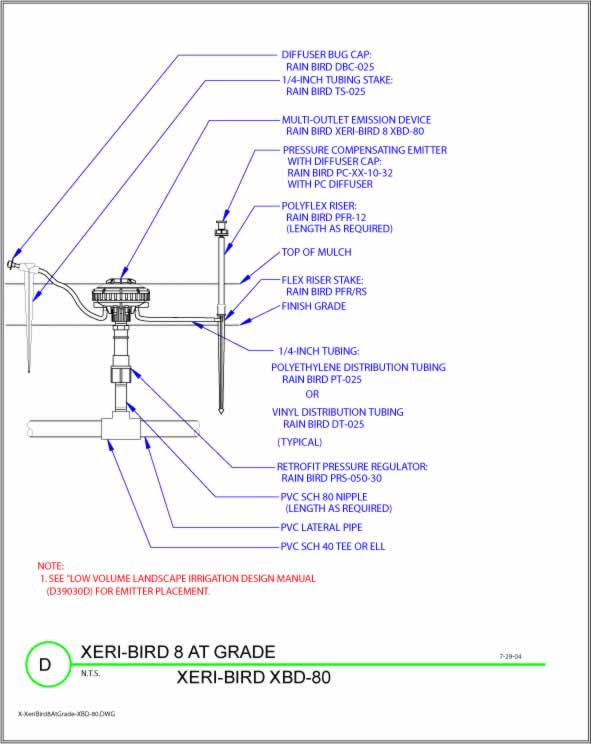
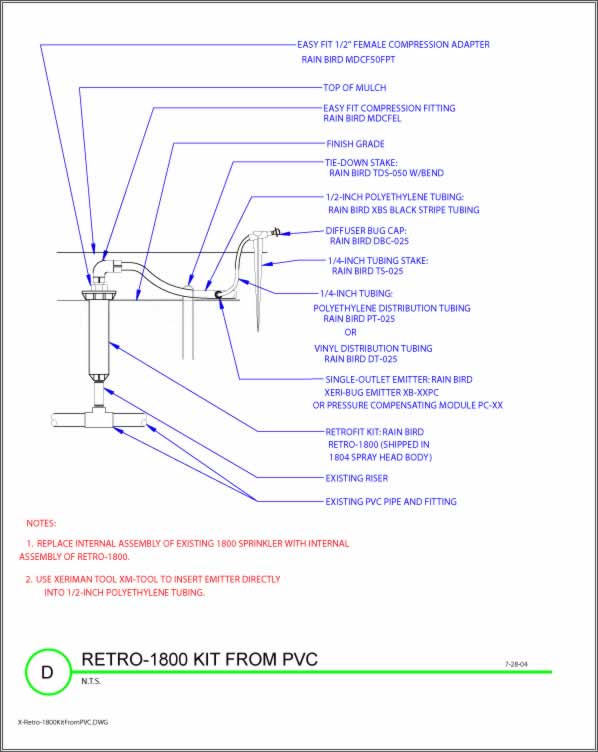
- Using specially manufactured equipment at each riser, which reduces pressure and separates the flow of water into individual drip lines. For the first option, it is advised to consult or hire an irrigation professional to design and install the new system. However, the second option can be an easy, convenient and practical solution. Fortunately, manufacturers produce equipment that allows you to leave the primary controls from the spray system in place while you remove each spray head and replace it with a multi-port drip transfer head. They typically include pressure regulation/compensation and filtration within each transfer head, as well as variable-flow emitters and transfer tubing to deliver the desired amount of water at the required distance from each head. See the pictures below for a visual guide to a drip irrigation retrofit project.