
Creating the Design

Creating the Design

There is a bewildering array of color, line, form, and texture of plants and building materials to choose from. It is important to bring these details together in an harmonious manner. Successful coordination creates a garden that is pleasing to the eye; the garden appears natural, balanced, and comfortable. Coordination also helps to camouflage the negative while accentuating the positive features. The details to coordinate are color scheme, line, form, volume, texture, and transition.

Pink water lily bloom near green lily pads on dark water
Pond Lily

Color Scheme

Create a color scheme by first examining what already exists on your property (house, fence, trees, hedges, hardscape, etc.). Next, consider your color preferences, and organize a color palette that works for you and your property.

Helpful hints:

Dark forest scene with a moss-covered tree trunk and vibrant green leaves.
Shadowed tree trunk with Ivy.

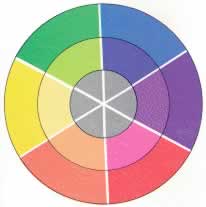
Color Wheel

The outer edge of a color wheel shows the primary colors of red, yellow and blue, along with their secondary colors of orange, green, and violet, or purple. The middle circle shows pale tints of the primary and secondary colors as a result of mixing them with white. The inner circle shows shades made by mixing black with the primary and secondary colors.

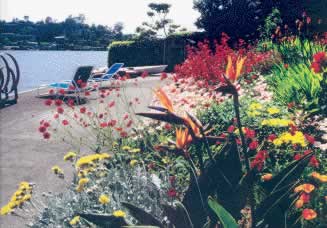
Colorful garden with blooming flowers by a lakeside pool and lounge chairs.
Color wheel in action
Circular color wheel with segmented wedges in concentric rings showing hue relationships.
Color wheel

Warm or Cool

Warm colors (red, orange, and yellow) are considered energizing. If you want to tone down these colors, place them in filtered light or against a dark background. Be spare with these colors, because too much may appear overwhelming and tire the eye.

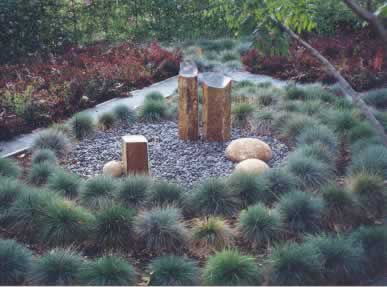
Cool colors (green, blue and violet) recede and calm. To brighten (highlight) cool colors, combine with white. This is useful for bringing attention to a shaded area. Cool colors disappear in shade and moonlight. White and pastels are washed out in sunlight.

Circular garden bed featuring three vertical stone sculptures framed by blue fescue grass.
Design: Suzanne Biagi, Sculptural Landscapes
This cool color palette is highlighted with three smooth, pale stones.
Near or Far

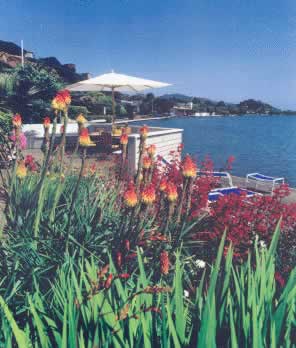
Warm colors (and white) make items seem closer and appear larger. Warm colors planted at the foundation line will make your home to appear closer to the street.

Seaside terrace with a white umbrella, lounge chairs, and red-orange flowers overlooking a calm blue bay.
Design: Ali Davidson, Landscape
This warm color palette is toned down by the blue Pacific Ocean
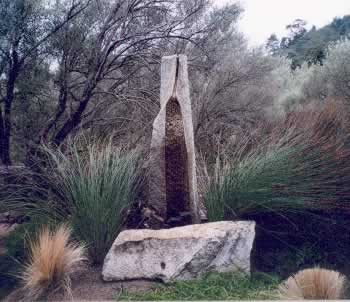
Cool colors (and black) make items recede and appear smaller. Cool colors planted at the foundation line will make your home to appear farther from the street.

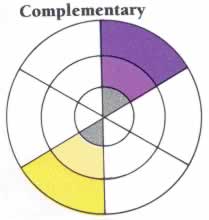
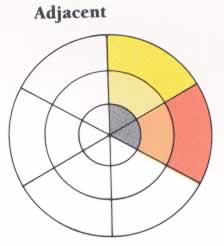
Color schemes: complimentary, analogous, monochromatic, and triadic.

Tall slender stone sculpture with an arched central opening on a raised pedestal, set among grasses in a park.
Design: Suzanne Biagi, Sculptural Landscapes
Cool gray colors of the fountain allows it to blend with the background, suggesting it is further away than it really is.
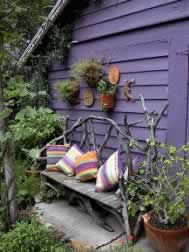
Purple wooden shed exterior with a black metal bench dressed in colorful striped cushions, surrounded by greenery.
Bold and bright complementary colors
Color wheel illustrating complementary colors with purple and yellow wedges.
Complementary colors
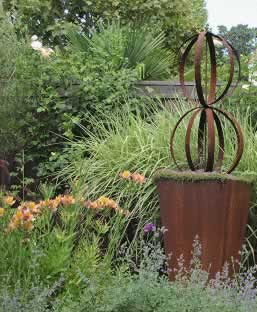
Rusty metal sculpture with looping circular rings in a lush garden with orange flowers and tall grasses.
Powerful shades of rust and orange spice this garden.
Circular diagram with concentric rings; color gradient sectors on the right from yellow to red, labeled Adjacent.
Adjacent color wheel
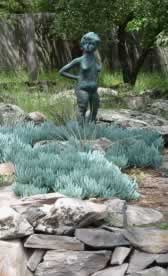
Bronze statue of a young boy standing with hands on hips in a rocky garden among blue-green succulents.
Blue hues
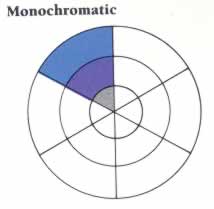
Monochromatic color wheel with blue and purple segments, showing concentric rings and radial divisions.
Monochromatic color wheel
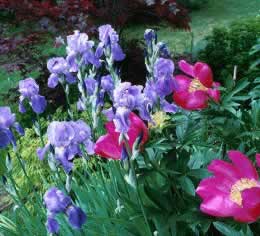
Purple irises beside pink peonies in a garden bed
Garden is rich with split-complimentary colors
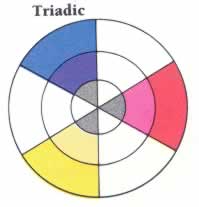
Circular color wheel illustrating a triadic color scheme with blue, pink, and yellow segments.
Triadic color wheel

Color and Rhythm

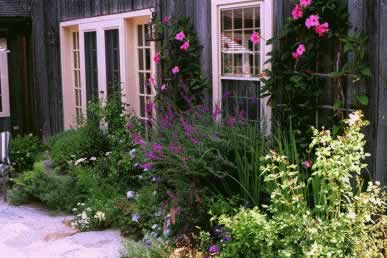
Repeating the color schemes creates a rhythm that will move the eye through, around, and/or beyond the landscape. For example: alternating rose-pink windowsills and groupings of purple flowers with green shrubbery.

Cottage-style garden along a wooden house with flowering plants and climbing vines around a white-framed window.
Pink, rose and green colors repeat along the wall and shrub border.

Seasonal Color

Annual plants are considered accent plants. They usually bloom for the one season only and must be replaced each year.

Close-up of pink and red ranunculus blossoms in a sunlit bouquet
Richly color-saturated Ranunculus provide the best flowers for cutting in spring.

Fall color plants (deciduous) are sound investments. Color change can start in early summer and last through spring. However, fall color usually means leaf drop, so design with maintenance in mind.

Line

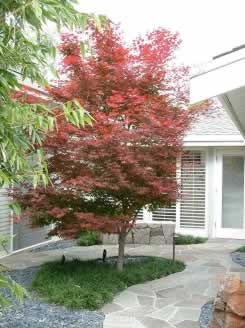
Red-leaf Japanese maple in a modern courtyard garden beside a white building and a stone path.
Fall color as a patio focal point.
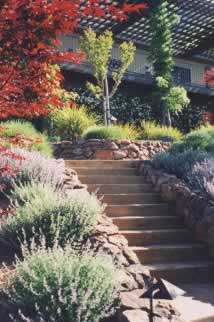
Stone garden steps lined with lavender and shrubs lead to a shaded pergola.
Beautiful fall colors announce steps

Choosing plants that reflect, or echo, existing lines (natural and architectural) on the property will help unify the garden.

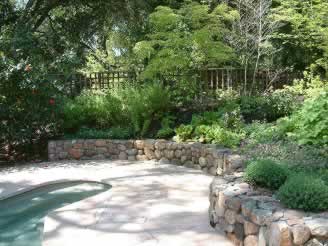
Backyard garden with a curved stone retaining wall, lush shrubs, and a wooden fence.
Refined planting follows the elegant curved line of the stone seat wall.
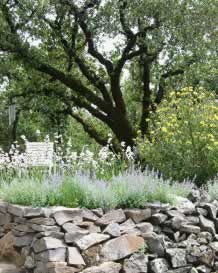
Stone wall with lavender in front of a large, leafy tree in a garden.
Black lines of the Oak tree trunk coordinate with the creviced stone wall.

For example: many one level, contemporary homes are styled with horizontal lines, so the garden should mimic the flow of those lines to create harmony.

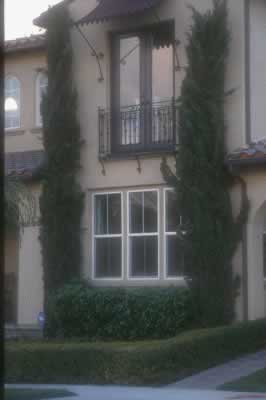
Residential building facade with two tall evergreen trees flanking a large ground-floor window and a small balcony above.
The vertical Cypress trees accentuate the two- story home’s tall, thin, windows and doors.
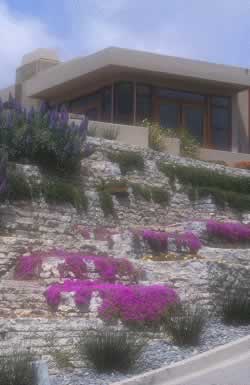
Modern hillside villa with stone terrace steps and vibrant purple bougainvillea against a blue sky.
Stone retaining walls are fitted into the hillside and complete the integration of structure and site.

Strive for an unbroken landscape line with these rules of thumb:

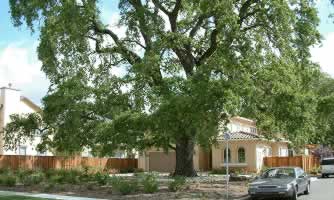
Large mature deciduous tree shading a suburban front yard with a brick house and a parked car.
The mature Oak tree is out of scale with the residential site.
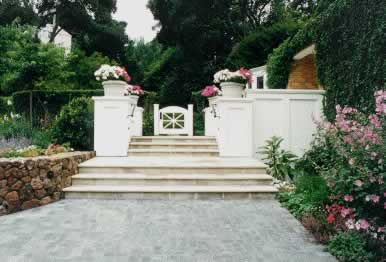
White garden entrance with steps to a decorative gate, flanked by planters and blooming flowers.
Design: Pedersen Associates Landscape Architects
Axial lines created by the paving, wall, and shrub border direct the eye to the delightful garden gate centered in between. The square pedestals add balance and symmetry to the garden.
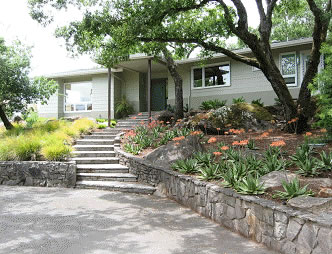
Residential front yard with terraced stone garden beds, concrete steps, and a mid-century house entrance.
Design: Exteriors, Landscape Architecture
This house is considered asymmetrical because the front door is not centered. The steps and low garden wall casually lead to the entry.
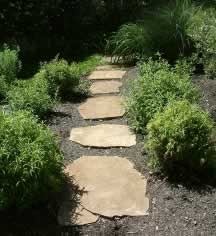
Stone stepping-stone path winding through a landscaped garden with green shrubs and mulch.
he endpoint of this path is uncertain because it disappears into the shadow.

Form

Make note of the shape of the dominant forms (structures, trees, shrubs, hardscapes, etc.) on your property. Choose plants that compliment or mimic these forms.

Suggestions on form and design:

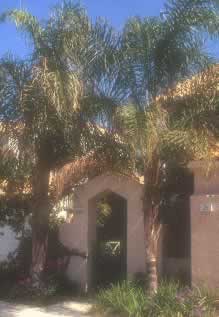
Small house with arched doorway, stucco walls, and tall palm trees in front.
The two palm trees dramatically announce the entry.
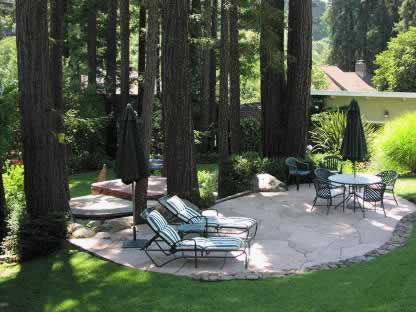
Outdoor stone patio circling mature trees with cushioned lounge chairs and a small dining set under shade.
Design: Michelle Derviss, Landscapes
The oval-shaped patio creates an inviting oasis.
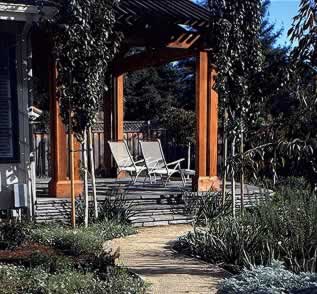
Wooden pergola over a deck with white lounge chairs beside a garden path.
Design: Pedersen Associates Landscape Architects
The columns of the pergola create the illusion of a Garden 'room' with its sense of enclosure.
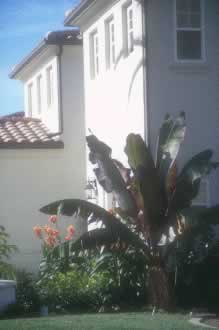
White two-story house with a tiled roof and a large tropical plant in the front yard.
The fanning leaves soften the sharp edges of the building.

Volume

When designing and drawing a garden plan, keep in mind the volume principle. A two-dimensional drawing may appear more spacious than the three-dimensional real thing.

Rules of thumb for volume:

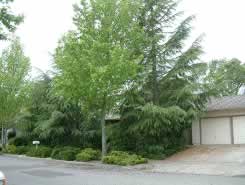
Residential street lined with mature trees and a driveway leading to a garage.
The overcrowded plants obscure the front of the house.

Texture

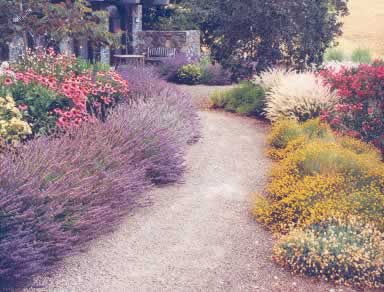
Gravel garden path bordered by vibrant flowering shrubs and lavender, leading to a shaded building.
Design: Chris Pedersen, Tending Garden
The fine-textured perennials soften the coarseness of the gravel.
Texture is the surface quality of an item that can be seen or felt. Surfaces in the landscape include buildings, walks, patios, groundcovers, and plants.

Texture can be coarse, medium, fine, smooth, rough, glossy, or dull. As with the other details, dominant or favorite texture should be used as a guideline in the design in order to unify the garden with the house and rest of the property.

Using texture in your garden:

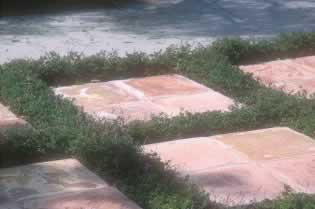
Pink rectangular stepping stones bordered by low hedges beside a body of water.
Rosy pink Satillo tiles planted with fragrant chamomile.
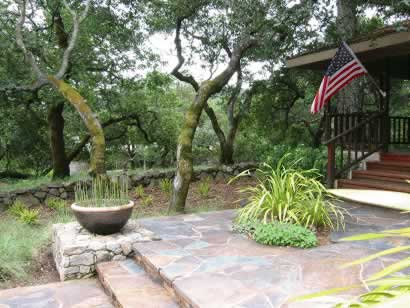
Stone patio with steps, curved vine-covered arch, potted plant, and an American flag by a wooden porch in a garden.
Design: Exteriors Landscape Architecture
Montana flagstone.

Transition

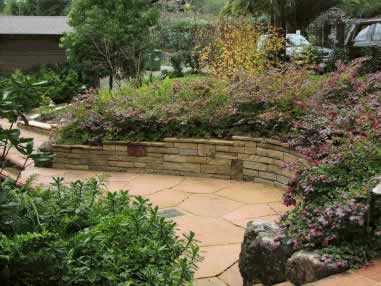
Curved stone retaining wall with flowering shrubs and a paved patio in a residential garden.
Design: Michelle Derviss, Landscapes Designed
The stepped wall and smooth pathway move a guest from one garden area to another.
Transition is the gradual change from one scheme to another. Applying transition, as with the other design concepts, helps to create a surrounding that is gracious and pleasing to the eye. For example, to entice an individual from an enclosed, intimate area to one that is spacious and open, the designer will make the gradual transition by placing plants and forms that graduate in size, height, texture, color, etc. along the exiting pathway. By doing so, one is gently drawn into the open, spacious area.

Helpful suggestions on transition:

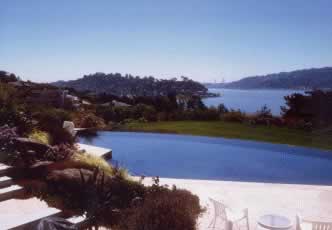
Outdoor pool with white decking perched on a hillside, overlooking a blue bay and distant coastline.
Design: Pedersen Associates, Landscape Architecture
The shallow width of the classic oval swimming pool shortens the viewing distance from the patio to the ocean and hills.

Before you start laying out your garden on paper, there are other details (building codes, utilities, soil, weather/climate, etc.) that need to be addressed in planning your garden.