

Sustainable landscaping is a term coined to mean sensible landscape practices that operate within the limits of the Eco-system. These landscape practices work within the limits of your local rainfall, soil conditions and sun patterns. When designed correctly, a sustainable landscape will not only be beautiful but will need a bare minimum of additional resources in the form of water and soil amendment to be vital and attractive.
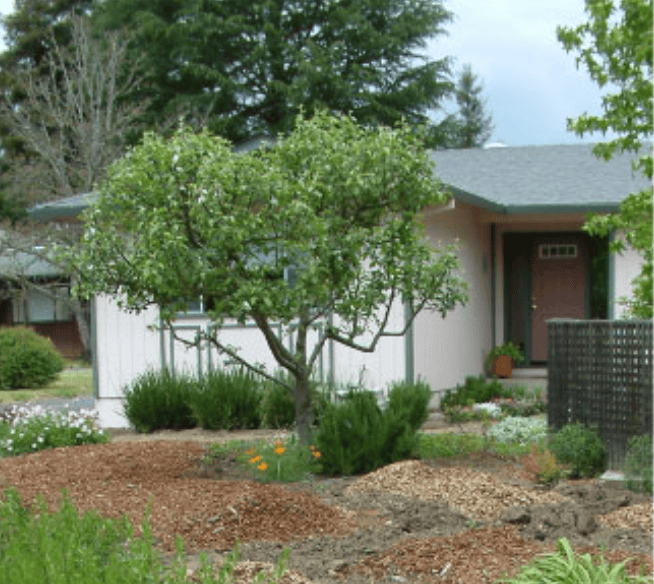
Why is Mulch Magical?
Mulch makes ugly drip systems disappear. Mulch miraculously turns bad soil into good soil. Mulch can help transform a small one gallon plant into a full grown shrub or help turn a sapling into a tree. Mulch can disguise damp newly irrigated soil so that it looks dry on the surface. For these reasons and many more, mulch is magical.
Using Mulch in Your Sustainable Landscape
All too often, we rake up the leaves and clear the space around our plants which deprives the soil of this much needed regeneration. Mulch (partially decomposed organic material) can be applied to the open spaces of any garden to remedy this situation. It is visually attractive and not only replenishes the nutrients in the soil but has the added benefit of insulating any water applied to the garden from sunlight that evaporate irrigation water. Mulch can be any material that can be placed on the surface of the soil to conserve moisture and prevent weeds from growing.
On Bare-Soil Pathways and Unplanted Areas
It is helpful to apply four to six inches of mulch on bare-soil pathways and unplanted areas to prevent compaction and erosion. Mulch will also regenerate or enrich heavy clay soils.
Under Trees
To prevent grass and weed growth around the base of young trees, apply two to four inches of partially decomposed organic matter (mulch) at least two feet out from the trunk. Leaving an open space near the trunk will prevent damage from weed-whackers and lawn mowers.
Around Woody Perennials and Shrubs
Apply two to four inches of mulch to help maintain soil moisture. Adding more – four to six inches deep – will also help prevent weed growth.
Around Vegetables and in Flower Beds
Apply one to two inches of straw or composted manure; this is best for annual plants because it breaks down quickly.
Recycle Green Waste as Mulch
Allow falling leaves to remain on the soil as mulch. Leaves can be shredded with a lawn mower and collected in a mower bag to be spread under shrubs. This will keep them in place in mulched areas and speed up their decomposition.
Get in the Mulch Habit
Eventually, mulch will decompose and break down. Weed seeds will blow in and grow without the insulation of mulch. Reapplying a one to two inch layer of mulch every six to twelve months (in fall before the rainy season, and in spring) is the key to preventing weeds from becoming established. A fresh layer of mulch will keep your garden looking clean and weed free.
Mulch Benefits
- Saves on watering needs by helping soil retain moisture by blocking the sunlight from the water that has percolated deeper into the soil under the mulch layer.
- Helps protect plants from soil-borne plant diseases.
- Decomposes over time into compost to feed the soil food web.
- Promotes soil health by moderating temperature, improving drainage, and preventing erosion and compaction.
- Reduces weed growth and weeds that do come up are easier to pull.
Mulching Tips
- Keep mulch six inches away from stems and two feet away from trunks to protect against microorganisms that cause plant diseases.
- Keep mulch 12 inches from building foundations to avoid creating a habitat for pests next to buildings.
- Use borders between lawns and mulched beds to prevent grass from creeping into the mulched area. Border material can be concrete, rail road ties, landscape ties, bricks, stone etc.; the material should be sunk four to six inches and protrude at least one inch.