

Why is Healthy Soil Important?
Healthy soil is the cornerstone of a vibrant landscape. It provides oxygen and nutrients vital to plant growth and sustenance. It provides protection from the sun and stability for root systems. The soil is very much alive and possesses degrees of health the same way the human body does. Healthy plants require healthy soil and protection from weather extremes, pests, and diseases.
Probe the Soil
Smell the soil. An pleasant aroma indicates a well balanced soil which indicates a vital eco-system. If your soil smells like rotten eggs, it might be too wet and compacted to allow oxygen exchange.
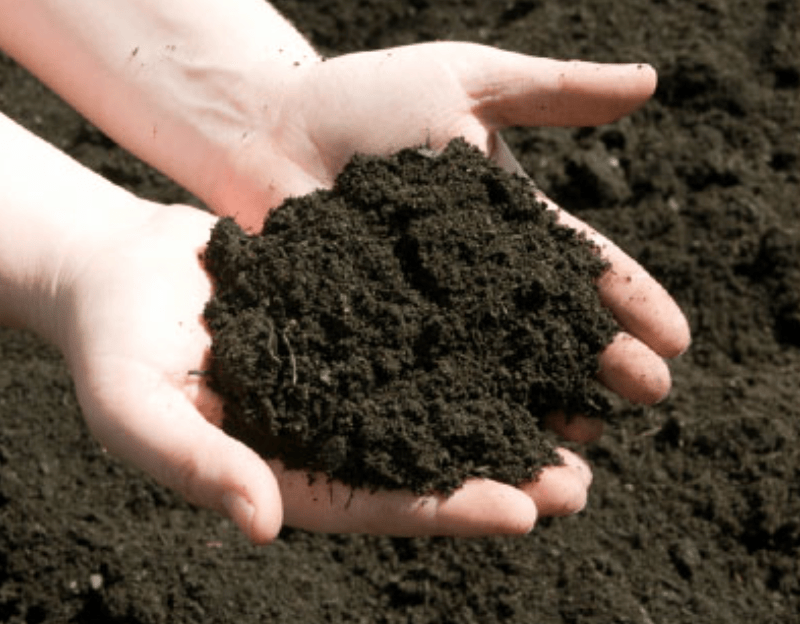
Look at the soil. Healthy soils are dark and loose. The dark color comes from organic matter, the foundation of the soil food web.
Look for soil life. Earthworms, mites, millipedes, centipedes, and sow bugs indicate a healthy soil ecosystem.
Feel the soil. Is your soil gritty or slippery, smooth or loose? Soil texture is an important clue to soil health. Heavy clay soils do not allow air into the system. The presence of organic matter provides space between the constituent parts for air to flow freely which plants need.
Soil Test. To know the chemical properties of your soil, a laboratory test is needed. (See Tools to Help Assess Your Soil (see below)
What is Healthy Soil?
Healthy soil is an ecosystem of many constituent parts. It is a combination of living organisms at both micro and macro levels. You can take the temperature of your soil in a manner of speaking using touch, smell, color, and by looking for the presence of beneficial living organisms.
Determine Texture with a Simple Test
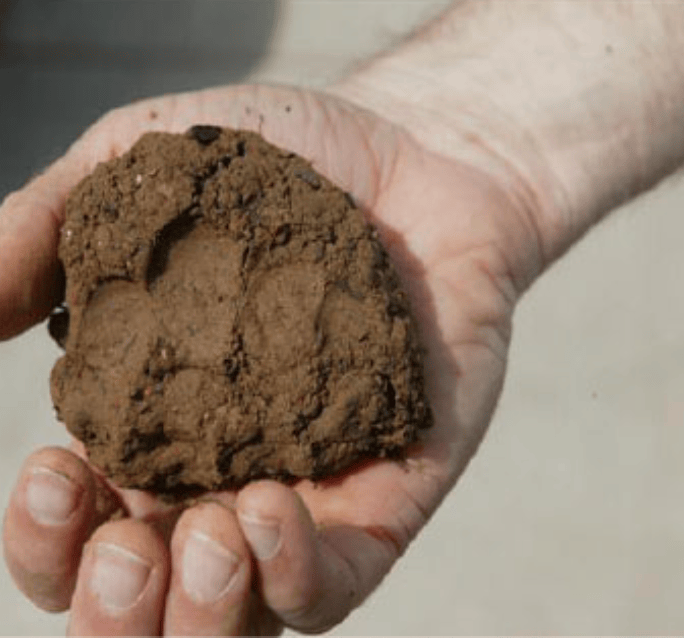
Moisten a small handful of soil and roll it into pencil shape shape in the palm of your hand. Gently squeeze the column of soil (with your fingers) and see how long a column you can make before the soil breaks apart. Clay feels sticky and will stay together than soils with less clay components. It will be slick and the column will break between 1-2 inches. Clay loam feels sticky, but the ribbon breaks at about 1 inch. Sandy loam feels gritty and sticks together, but won’t form a significant column. Sandy soil feels gritty and falls apart before it is even through your fingers!
Soil Properties: Qualities of Good Soil
Selection and Water Regimes
Soil Texture
Healthy soil is the cornerstone of a vibrant landscape. It provides oxygen and nutrients vital to plant growth and sustenance. It provides protection from the sun and stability for root systems. The soil is very much alive and possesses degrees of health the same way the human body does. Healthy plants require healthy soil and protection from weather extremes, pests, and diseases.
Why Soil Texture Is Important For Your Yard
Healthy soil is the cornerstone of a vibrant landscape. It provides oxygen and nutrients vital to plant growth and sustenance. It provides protection from the sun and stability for root systems. The soil is very much alive and possesses degrees of health the same way the human body does. Healthy plants require healthy soil and protection from weather extremes, pests, and diseases.
Soil Testing Helps you Decide
If you are the scientific type, you might want to invest in a laboratory soil test. The test will reveal your soil’s pH, organic content, nutrients, salt content, and potential contaminants. In this way, you will be sure of what you are working with and will take the guess work out of your soil analysis. The test is usually inexpensive, but can be very helpful. Contact your local office of cooperative extension from the University of California to get more information.
Labs also provide recommendations to address soil deficiencies. This will help you determine the best amendments or fertilizers for your yard, should you need it. Always ask the lab for organic fertilizer recommendations, which are always preferable for long term health of the soil.

Why Organic Materials are Important
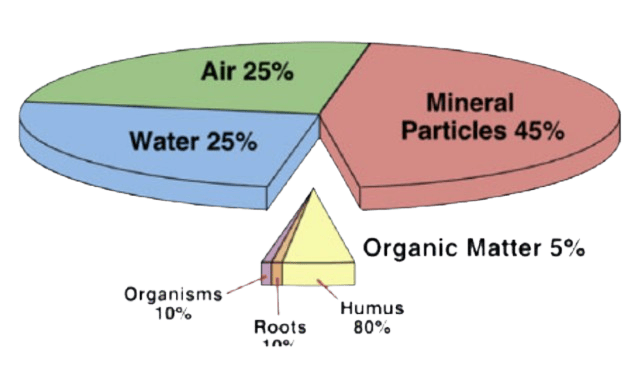
While “soil texture” refers to the type of composition of particles in your soil, “soil structure” describes how those particles are bound together into larger units or “aggregates.” Aggregates form as soil microbes break down organic matter and produce a gum-like substance that cements particles together. As soil structure improves, more spaces are created between large and small aggregates, making it easier for air and water to circulate. Good soil structure helps lessen the harmful effects of challenging soil textures such as clay and sand. In this way, soil organic matter helps:
- Retain water in sandy soils
- Drain water in clay soils
- Resist compaction
- Improve root growth and air circulation
- Retain nutrients near the roots
- Protect plant roots from salt buildup, temperature extremes, and water stress
Soil Life
A healthy soil ecosystem includes a rich food web of fungi, bacteria, insects and worms. Organic matter is the base of this web. A sustainable landscape returns nutrients to the soil food web as microbes break down organic matter. Microbes, worms, and other soil organisms also bind particles together and transform plant residues and animal wastes into stable soil organic matter or humus. Humus can store up to 90 percent of its weight in water and holds nutrients, protecting them from washing away.
Why Organic Materials are Important
Simple tools can help you keep your finger on the pulse of your soil ecosystem.
- Retain water in sandy soils
- Drain water in clay soils
- Resist compaction
Use the table below to identify sustainable solutions for rebuilding healthy soils
Problems or Practices that Diminish Soil Health | Solutions for Rebuilding Soil Health |
|---|---|
Bare soil is easily eroded and compacted Soil life is starved when leaves and clippings are raked away. | Maintain a two to four inch layer of mulch on the soil surface. This supplies organic matter, helps infiltrate and retain water, and prevents compaction. Use green waste from your yard as mulch or buy locally recycled green waste mulch. See the fact sheets for Compost and Mulch. |
Overuse of quick-release fertilizer
Synthetic fertilizers made of salts kill populations of beneficial soil microbes. | Feed the soil and your plants with compost. Make your own, or purchase quality, certified compost made from locally recycled materials. Use natural fertilizers made from biological ingredients. Practice grass-cycling by leaving grass clippings on lawns so that nutrients and organic matter are returned to the soil. See also the Fertilizing factsheet. |
Overuse of pesticides Broad-spectrum pesticides kill soil decomposers and soil-dwelling predators of insect | Use an integrated pest management (IPM) approach to control weeds and pests. IPM uses horticultural, physical, biological and less-toxic chemical controls that protect the health of soil, water, humans, and beneficial insects. Visit www.ipm.ucdavis.edu for information about IPM strategies for specific pests. |
Cultivating wet soil Damages soil structure and results in compaction, suppressed root growth, and reduced air circulation. | Help earthworms and other soil life to rebuild soil structure by applying a layer of compost and/or mulch. Grow deep-rooted plants such as California native grasses and green manures whose living and decaying roots will create air spaces and add organic matter. |